By Project Sunwave Team
|
The Power of Early Intervention at Project Sunwave
Introduction
Our youngest participants at Project Sunwave may be small in size, but they're big on enthusiasm. Through our "Vonk" program, nature-based exploration, and playful psycho-education sessions, we're not just teaching skills — we're laying down protective factors. While many youth programs target teenagers, we've made a conscious choice to also focus on children under the age of 10, the years when curiosity runs wild, confidence is still malleable, and foundational life skills are taking shape.
The Science of Positive Youth Development
Positive Youth Development (PYD) is a strengths-based approach that promotes the belief that all young people have the potential for healthy, constructive growth when supported by the right environments. According to Lerner et al. (2005), PYD emphasizes the "Five Cs": competence, confidence, connection, character, and caring — developmental assets that are cultivated, especially during early childhood. The Center on the Developing Child at Harvard University reports that more than one million new neural connections form every second in the first few years of life, meaning early, safe, nurturing experiences shape brain architecture in ways that influence lifelong health, learning, and behavior.
How Vonk Puts the Research into Practice
Key elements of our approach:
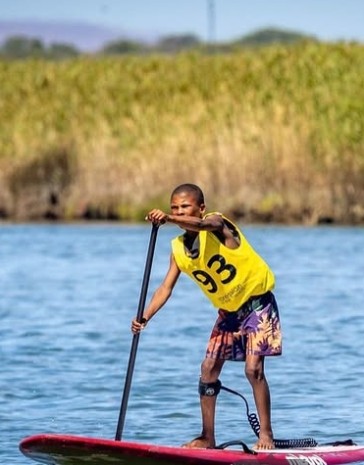
Structured water activities that improve self-regulation, focus, and social cooperation in early childhood (Tandon et al., 2020).
Mentorship and positive adult role models that amplify the impact of those activities.
Scaffolded learning, gently guiding children just beyond their comfort zone — like a hesitant six-year-old learning to float, or an eight-year-old sharing how the ocean makes them feel during a feelings circle.
Key elements of our approach:
Structured water activities that improve self-regulation, focus, and social cooperation in early childhood (Tandon et al., 2020).
Mentorship and positive adult role models that amplify the impact of those activities.
Scaffolded learning, gently guiding children just beyond their comfort zone — like a hesitant six-year-old learning to float, or an eight-year-old sharing how the ocean makes them feel during a feelings circle.
The Ripple Effect Studies (Jones et al., 2015) show that social-emotional learning (SEL) in primary-aged children correlates with improved classroom behavior, reduced emotional distress, and stronger academic performance. In Lambert's Bay, where educational resources are limited, our programs complement school learning by supporting emotional literacy and helping children feel seen and supported.
Conclusion
Investing in children under 10 is not just a feel-good strategy — it's a smart, evidence-based commitment to long-term community upliftment. These early years are our chance to nurture not only swimmers, surfers, and nature-lovers, but confident, kind, and capable young people. As always, we're grateful to our partners, coaches, and supporters who help us shape the waves of change, starting with the smallest of hands.